Render colour changes and coatings
Render colour changes and coatings in York
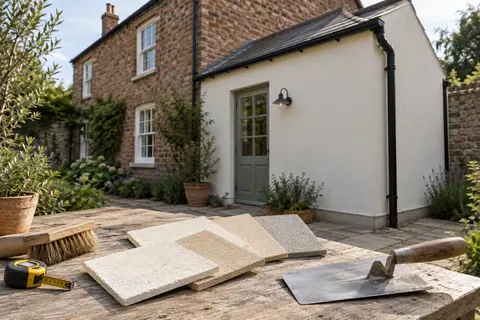
A render respray, or recoat, puts a new coloured coating over render that is still sound. It is the lightest way to change how a rendered house looks: no stripping and no new render, just cleaning, repairs and two coats. Its success depends on what is underneath, and on an older York wall that includes whether a modern coating belongs there at all.

On this page
When recolouring works
The render should be solid when tapped, free of bulges and wide cracks, and dry. Faded colour, uneven patches from earlier repairs, light staining and a colour you have grown tired of are all good reasons to recoat. Cement-based and scraped renders on post-war houses and extensions are the usual candidates.
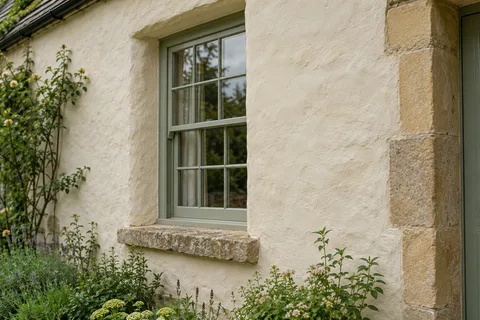
Where render is hollow, cracked through or wet, recoating hides the problem for a season, so repair first. And where the render is lime, a modern coating is the wrong product: SPAB recommends limewash on lime render, because standard modern paints are less permeable and can trap moisture in the wall.
- Clean Washed down, with algae and mould treated and left to work.
- Repair first Cracks and hollow patches are repaired before any coating.
- Prime or stabilise Where the coating maker requires it on that surface.
- Coating Usually two coats of a breathable masonry or silicone coating.
The usual order of work. The survey and the chosen products decide the actual steps.
Finding out what is on the wall now
Older render may already carry several layers of paint, and the type matters. IHBC says limewash should never be patched or overpainted with other types of paint, so a limewashed wall stays limewashed. Old invoices, tins or a careful test on a small area can identify what is there, and flaking paint must come off before anything new goes on.
K Rend's preparation notes for its Colour Enhance coating are typical of what a sound job needs: the surface cured, dry and clean, with loose or friable material, including old coating, removed along with oil, soot, lichen and dust, and all render repairs completed first.
How the coating goes on
Algae is killed with a biocide and washed off, the wall dries, and repairs are made and left to cure. Windows, doors, sills, timber, brick and paving are masked. A test panel shows the colour on the wall itself before the whole elevation is coated.
Two coats are normal. With K Rend's Silicone Masonry Paint, the first is thinned with up to 10% clean water and the second goes on undiluted 8–12 hours later, by brush, roller or spray, never below 5°C or above 30°C. Spraying is quicker on a large plain wall; rolling gives more control in a narrow street, beside parked cars or on a breezy day.
Tap-test; repair hollow and cracked render
Biocide, wash, and let the wall dry
Remove flaking coatings
Mask openings, stone, brick and paving
Test panel; first coat thinned, second full
Remove masking and inspect edges
Colour in a historic city
The colour of a frontage belongs to the street as well as the house. In York, Article 4 directions in some conservation areas remove permitted development rights for certain minor alterations, and the council's appraisal of the historic core describes a harmony of plaster, brick and limestone. Ask the planning team whether a colour change on your street needs consent before you buy the coating.
Try samples on the wall and look at them at different times of day. Bright whites and strong colours look very different beside weathered brick and limestone than they do on a chart.
Keeping the new colour
Coat each elevation from one batch to avoid shade changes, and keep the product name, colour code and batch number. Clear gutters each year and treat algae when it first appears.
A stain that keeps coming back under a sill or pipe is a water problem, not a paint problem. Find and fix the source, through render repair if the render has suffered, before recoating that area.
Common questions
Can a coating fix fine cracks?
A coating may hide hairline crazing, but it will not hold back a crack that is moving or render that has come away from the wall. Repair those first.
Should I spray or roll?
Either can work; K Rend's silicone paint can be brushed, rolled or sprayed. Spraying needs careful masking and still air, while rolling is slower but easier to control near windows, stone and neighbouring property.
Will a coating stop damp in the wall?
No. A coating sheds rain from sound render, but if water is getting in through cracks, a failed gutter or render bridging the damp-proof course, the cause has to be fixed first. SPAB warns that less permeable coatings can trap moisture, so coating a damp wall can slow its drying.
See housing and planning information for York and nearby places, including the source and geography behind each figure.